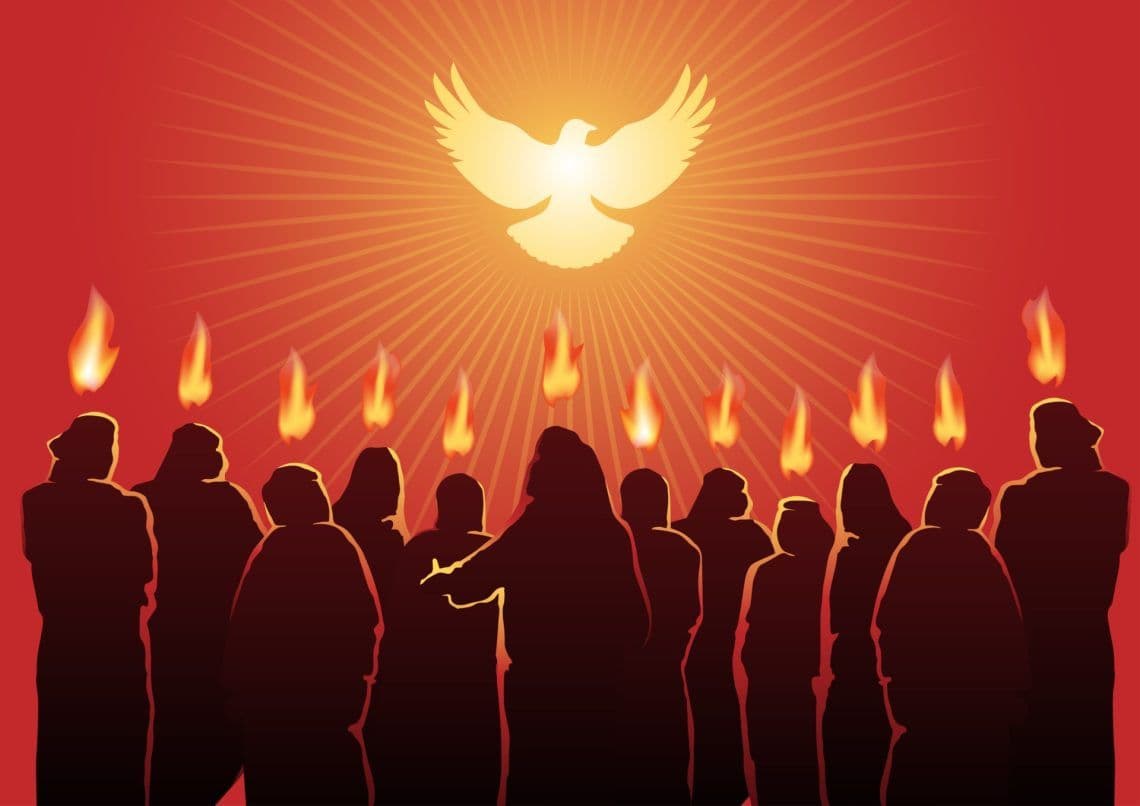
The Pentecost Fire and the Prodigal’s Return
On Pentecost Sunday, Pastor Albert Ofori delivered a stirring message about revival, restoration, and the necessity of the Holy Spirit in the life of every believer. Drawing from the Book of Acts and the Parable of the Prodigal Son, the sermon challenged Christians to reject spiritual isolation and return to the covering, unity, and fire of God’s presence. Just as a car cannot function without fuel, believers cannot thrive without the empowerment of the Holy Spirit.
There are moments in the Christian walk where God reminds His people that faith was never meant to become dry routine. Pentecost was one of those moments.
During a powerful Pentecost Sunday gathering at Rivercourt TV, Pastor Albert Ofori emphasized a truth many believers often overlook: the Holy Spirit is not optional in the life of a Christian. He is essential.
Using the simple but profound analogy of fuel in a car, Pastor Ofori explained that no matter how beautiful or expensive a vehicle may be, it remains powerless without fuel. In the same way, believers may attend church, carry titles, or know scripture, yet still lack the spiritual fire necessary to live effectively if they are disconnected from the Holy Spirit.
Pentecost Was Never Meant to Be History
The outpouring in Acts was not merely a historical event to admire from a distance. It was the birth of a Spirit-empowered Church.
When the disciples gathered in unity, prayer, and expectation, heaven responded. The Holy Spirit descended with power, transforming fearful men into bold witnesses. Pentecost became the ignition point for revival, evangelism, miracles, and spiritual boldness.
Today, many believers desire results without intimacy with God. We seek power without prayer, revival without surrender, and transformation without the Holy Spirit. But Pentecost reminds us that spiritual fire only comes from God’s presence.
The Danger of Spiritual Isolation
One of the strongest themes from the message came through the Parable of the Prodigal Son in Luke 15.
The prodigal did not fall overnight. His downfall began the moment he disconnected himself from his father’s covering. What seemed like freedom eventually became emptiness, brokenness, and spiritual famine.
This mirrors the danger many Christians face today. In a generation that celebrates independence and self-direction, many believers slowly drift away from accountability, fellowship, and spiritual authority. Yet isolation has always been one of the enemy’s most effective weapons.
The prodigal only found restoration when he returned home.
Pastor Ofori warned against the spirit of individualism that quietly convinces believers they can survive without community, church, or spiritual guidance. Christianity has always been deeply communal. The early Church prayed together, worshipped together, and carried one another through trials.
There is safety in godly covering. There is strength in unity.
Revival Begins With Returning
The beauty of the prodigal story is not merely rebellion. It is restoration.
No matter how far the son had fallen, the father never stopped waiting.
This is the heart of Pentecost as well. God still pours out His Spirit on those who hunger for Him. He still revives weary hearts. He still restores those who return.
Many believers today are exhausted spiritually. Some have lost passion in prayer. Others feel distant from God, wounded by disappointment, or consumed by distractions. Yet the invitation remains open: return to the Father and receive fresh fire again.
God does not call His people to survive on yesterday’s oil.
A Church United in Prayer
The service itself reflected the very message being preached. Through worship, collective prayer, and heartfelt fellowship, the congregation demonstrated the power of unity within the body of Christ.
Pentecost was birthed in togetherness, and revival is sustained through togetherness.
As the ministry also prepares for relocation into a new building, the moment marked not just a physical transition, but a spiritual one. It symbolized growth, expectation, and a renewed commitment to God’s assignment.
Final Reflection
The Christian life cannot be sustained by routine alone. We need the fire of the Holy Spirit, the strength of spiritual family, and the humility to remain under God’s covering.
The prodigal returned home and found mercy waiting. The disciples waited in unity and received power from heaven.
Perhaps the call today is the same for us:
Return.
Refill.
Revive.